
Back to the Tangible
A reflection on the anxiety caused by the constant use of cell phones and technology in our lives.
How many times do we check our phones without thinking? How many times do we pick it up just to check the time and end up getting caught up in notifications, videos, emails, and messages? How many times do we start out with a specific intention and, in the end, forget why we picked it up in the first place?
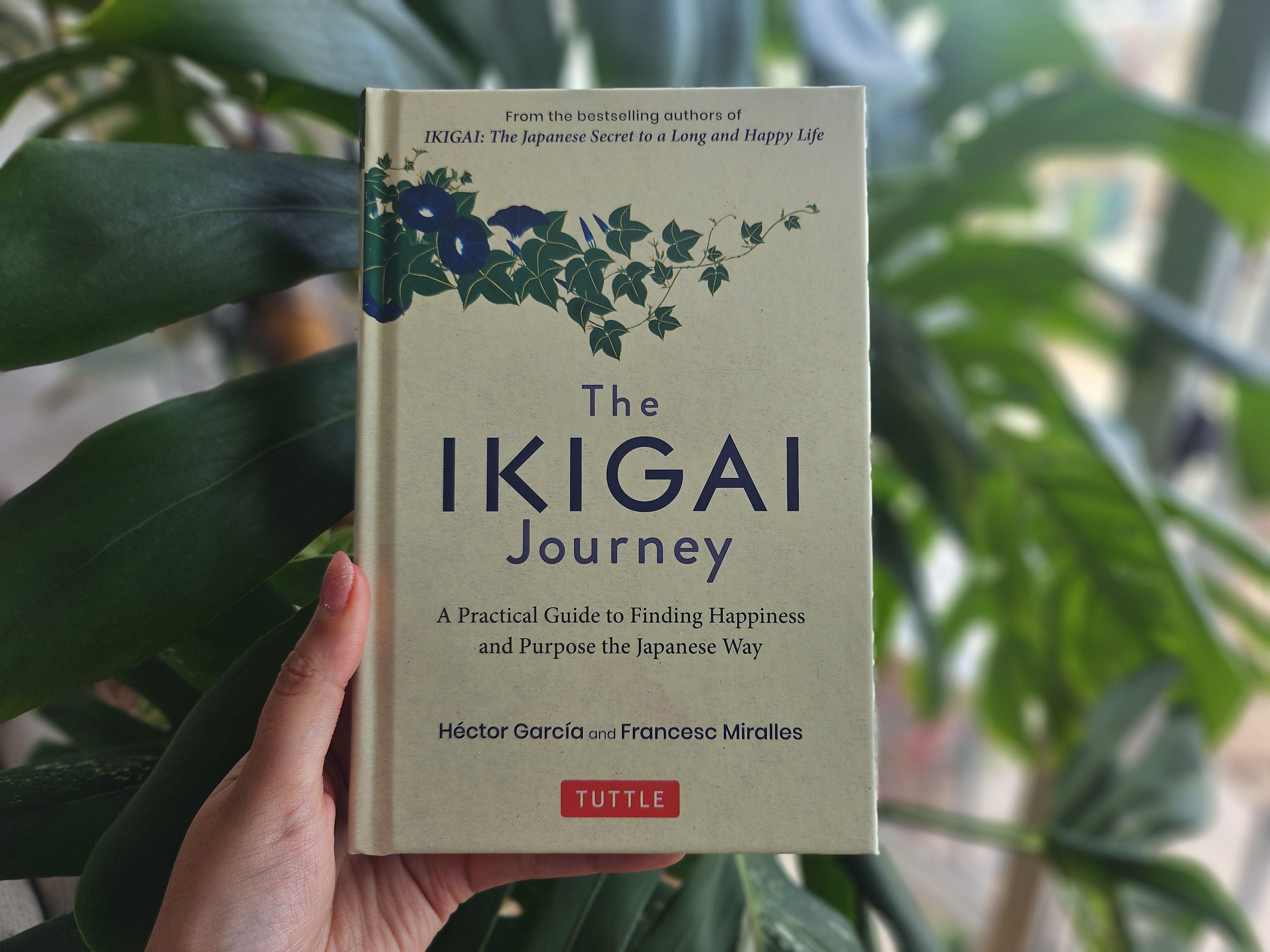 The Ikigai Journey
Over the last few days, these questions have become a recurring theme in my conversations. And as I read *The Ikigai Journey*, I found words and ideas that helped me put into words everything I’d been feeling.
We live in a time of constant FOMO: AI, changes, new platforms, social media, notifications, horrible news… everything moves at a speed we can barely process. It seems like there’s never enough time to keep up. And yet, there we are: exhausted, but unable to put down our phones. Scrolling mindlessly, as if we were searching for something we don’t quite know what it is.
How can we avoid getting trapped in that constant feeling of restlessness? I think we can find a clue in purpose. Purpose as an anchor
And purpose stems from self-knowledge: asking ourselves, “Why do I do what I do?” Recognizing our strengths, understanding what drives us. Ikigai—that Japanese concept that brings together what we love, what we’re good at, and what the world needs—can be a great starting point. Why is it important to have a purpose? Because it allows us to communicate it, expand it, transform it…and above all, share it.
A shared purpose helps us break free from the cycle of constant restlessness. From this collective effort emerges a shared vision that allows us to prioritize and adapt to change with strategy and meaning. And that’s when the questions shift:
Do I need this? What for? Why? What role do I want it to play in my life?
These are questions that don’t seek to distance us from technology, but rather to invite us to use it meaningfully. Because the challenge isn’t, for example, to ban our phones or forcibly limit their use, but rather to decide how and for what purpose we incorporate them into our lives.
It’s not a matter of disconnecting from the digital world, but of reconnecting with ourselves (and with others!). With that vital drive, that energy that emerges when we do things that truly interest us.
Engaging with technology from a human perspective means just that: choosing how and for what purpose we use it. It means re-valuing contact with other people, the tangible, the things that aren’t measured in likes or notifications. A face-to-face conversation. A book. Hands in the soil. Feet in the sand. A concert. Silence.
An Act of Personal Disruption
In times when everything pushes us to be available, visible, and hyper-productive, reclaiming empathy, creativity, the enjoyment of leisure, and connection with others can be a profoundly revolutionary and disruptive act.
Perhaps it’s not about putting down the phone, but about asking ourselves: Am I using it to draw closer to what matters to me… or to drift away without even realizing it?